



Safe and efficient: The importance of a forklift driver’s license for all employees in material handling and logistics
In the world of material handling and logistics, the indispensable forklift is a surprising reality: it is more than just a material handling device. Year after year, unfortunate accidents occur in which these vehicles tip over and bury their drivers. But the dangers are not limited to the direct operators - other warehouse employees also become at risk if the forklift is not navigated correctly. And then there is the potential for material damage to the goods stored or in the warehouse premises.
What many people do not know: In Germany, the German statutory accident insurance (DGUV) The trade association regulations stipulate that driving a forklift truck is only permitted to persons with a material handling license – also known as a forklift license.
This forklift license is not just a formal permit, but a key to safety when handling these powerful machines. It not only teaches technical skills, but also raises awareness of the potential dangers. It is more than just learning driving maneuvers - it is about understanding safety protocols and preventative measures.
At Griptech we take the importance of the forklift license seriously, at Griptech all employees, including office workers, have the opportunity to acquire the forklift license.
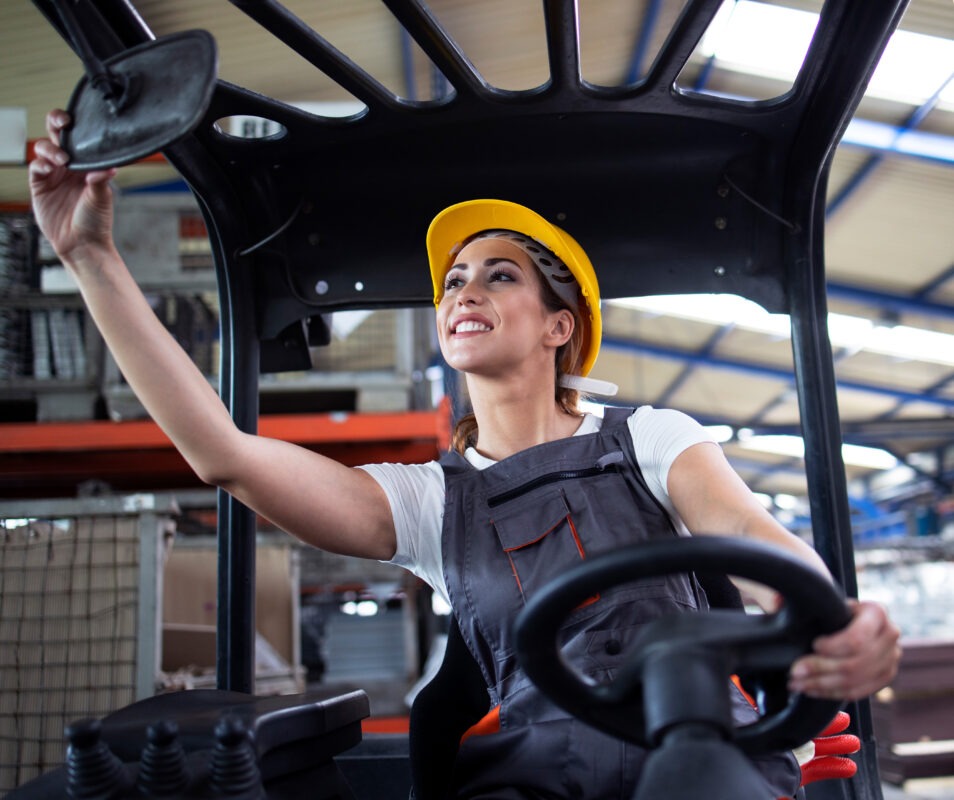
What do you learn on the forklift license?
The forklift driver's license, officially known as "Training and commissioning of drivers of industrial trucks with driver's seat and driver's cab" is the key to safely operating forklifts. The good news is that basically anyone can get this license. Here are some formal requirements that you should consider before getting behind the wheel of a forklift:
Minimum age of 18 years: You must be of legal age to obtain a forklift license and to be able to drive the vehicle safely.
Personal suitability: In addition to the minimum age, a necessary personal suitability is also required. This refers to physical, mental and character aspects that are relevant to the safe operation of a forklift truck.
Written operating authorization: In addition to the forklift driver’s license, you need a written driving order of the operation.
Site-specific instruction: Even if you already have a forklift license, on-site training is required before you can operate a forklift. This ensures that you are familiar with the specific conditions of your workplace and are aware of local safety guidelines.
It is important to stress that training is not just on paper. Practical on-site instruction is a crucial step in ensuring safe forklift operation - even for those who already hold a forklift license. Safety first, and with these basic requirements, you will be well on your way to becoming a responsible and safe forklift operator.
Theory: On the way to becoming a professional forklift driver
A solid theoretical basis is crucial for the safe handling of forklifts. During the theoretical training, various key topics are covered:
Legal basis: Knowledge of relevant laws, regulations, ordinances and rules is essential. This teaches you which legal framework must be observed when driving forklift trucks.
Accident: Learning from other people's mistakes - this maxim is conveyed in the context of accident prevention. By analyzing accident scenarios, participants are made aware of how to recognize and avoid potential dangers at an early stage.
Structure and function of industrial trucks and attachments: A thorough understanding of the structure and function of forklifts and their attachments is essential. Only those who understand the technology can operate it safely and efficiently.
Drive types: The different drive types of forklift trucks are examined, as well as their specific areas of application.
Stability & load: The focus is on topics such as the behavior of the forklift truck when starting and braking with a load, the role of the ground conditions, the influence of attachments and the correct behavior on inclined surfaces. The prevention of tipping accidents is also covered in detail.
General operation & operating instructions: From appropriate driving speed to correct entry and exit behavior – the training covers all aspects of safe operation. Potential hazards during operation are also discussed.
Regular check: The importance of regular vehicle inspection before each journey and the interpretation of inspection stickers are explained.
Handling load: How do you transport different types of loads safely? Loading and unloading vehicles is also a key issue.
Special missions: Special situations, such as the use of forklifts on work platforms, trailers, in the freezer area or in public spaces, require special knowledge that is taught during the training.
Traffic rules/traffic routes: Compliance with traffic rules and safe navigation through bottlenecks, doors, loading ramps and similar situations are discussed in detail.
Load centre diagram: The determination of weight distribution and permissible loads using load centre diagrams is taught in order to ensure safe handling of loads.
Comprehensive theoretical training ensures that prospective forklift drivers not only meet legal requirements but are also able to carry out their tasks safely and efficiently.
Practice: From beginner to master on the forklift
Practical training is the key to transferring the acquired theoretical knowledge into safe application. This includes various practice-oriented elements:
Instructions on the industrial truck: Participants receive thorough instruction on the specific industrial truck that they will use in their daily work. All relevant controls and safety features are explained.
Daily operational testing: The importance of daily operational testing is highlighted. Participants learn how to check the industrial truck before each use to ensure it is in perfect working order.
Information on dangerous areas on the industrial truck: The identification of potential danger spots on the vehicle is trained in order to avoid accidents and to be able to react to safety risks at an early stage.
Getting used to the industrial truck: Through practical exercises, participants gradually become accustomed to handling the industrial truck. This includes safe driving, braking and maneuvering with and without a load.
Leaving the industrial truck: The correct technique for getting in and out is taught to avoid injuries and ensure safety during work processes.
Driving & forklift exercises: Practical driving and forklift training on the company premises helps participants hone their skills in a real working environment. This includes moving loads safely, driving on different surfaces and avoiding obstacles.
The combination of theoretical training and practical exercises enables the aspiring forklift drivers to not only acquire the necessary theoretical knowledge, but also to develop the necessary practical skills. This makes them competent and safe drivers who can cope with the daily demands of material handling.
After the training: The path to becoming a forklift professional
Attention: The forklift license simply marks the beginning of the training. Before you get behind the wheel of a forklift in a company, you have to undergo an in-house training session. This not only teaches you the specific functions of the model you will be operating, but also the special regulations that apply in this company.
After this instruction, you are ready to get going. But, as with driving a car, having a driving license alone does not mean that you are already safe! When driving a forklift, the motto is: maintain a cautious driving style and do not overestimate. It is advisable to practice more often and ask questions if you are unclear about something rather than taking risks. With time and the necessary routine, you will quickly become a forklift professional.
Annual refresher courses are the key to staying up to date. The forklift license is valid for life, but unlike a car driver's license, you are required to attend an annual training course. This half-day training course not only refreshes your knowledge, but also discusses any new developments. A little theoretical input per year to ensure that you are always informed about the latest safety standards and regulations. This way you not only stay safe, but also become a real professional in material handling.
Who needs a forklift license?
All people who operate or drive forklifts need a forklift driver's license. This includes not only drivers in warehouses and manufacturing facilities, but also employees who occasionally operate a forklift. Workplace safety concerns everyone, and the license ensures that everyone who works with forklifts has the necessary competencies.
Griptech's commitment to forklift knowledge
Griptech is a specialist in attachments, weighing technology and camera technology for forklifts and industrial trucks, so we consider knowledge of the safe and efficient operation of forklifts to be an integral part of our corporate culture. Regardless of position in the company, we firmly believe that every employee should have a basic understanding of forklifts. Therefore, we offer all employees the opportunity to obtain a forklift driver's license.
Safety, efficiency and customer understanding
Our belief is based on the idea that a comprehensive understanding of forklifts not only promotes safety in the workplace, but also leads to more efficient collaboration between departments. Training our office staff in forklift skills strengthens their understanding of our customers' needs and challenges.
Why a forklift driver’s license is essential for all Griptech employees
The forklift license is not only a legal requirement, but a crucial element for safety and efficiency in the workplace. At Griptech, we are committed to ensuring that all employees, including office workers, have the opportunity to obtain this license. We believe that a comprehensive understanding of forklifts and industrial trucks forms the basis for a safe and productive work environment.
